When most people think of Nevada, images of parched deserts and glittering casinos come to mind. But for adventurous equestrian travelers, the Silver State offers a treasure trove of riding opportunities. With 150 named mountain ranges—the most of any U.S. state—peaks soaring above 10,000 feet, and the highest point, Boundary Peak, reaching 13,140 feet, Nevada is a playground for horse riders seeking scenic beauty and public lands to explore.
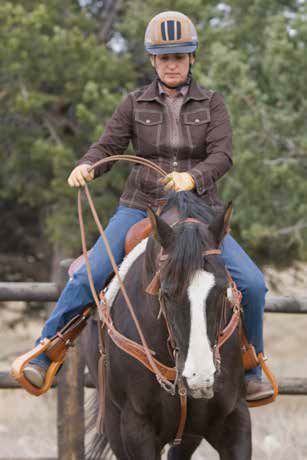
Charlene and Kent Krone, along with their Missouri Fox Trotter geldings, Nate and Cowboy, recently explored southern Nevada and discovered several superb riding destinations just a short drive from Las Vegas.
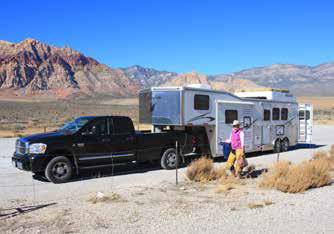
in Red Rock Canyon National Conservation Area.
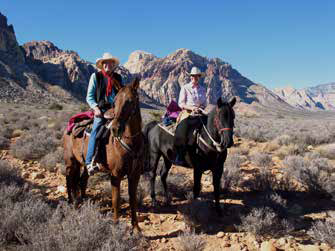
Rainbow Mountain and Sandstone Bluffs are behind
them.
Valley of Fire State Park
Located 56 miles northeast of Las Vegas, Valley of Fire State Park spans 42,000 acres of sandstone formations, washes, and diverse cacti species. Its fiery name comes from red sandstone formations sculpted over 150 million years through shifting sands and erosion.
While the park doesn’t have overnight stabling facilities, it’s perfect for day rides. Many riders blaze their own trails, discovering hidden gems along the way. One favorite route is the Prospect Trail, a 12-mile scenic ride over mostly silt and sand, where riders can spot ancient petroglyphs etched into rock walls.
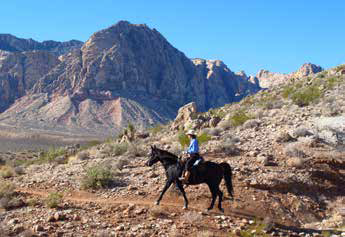
travels around a mountain and through the town of Blue
Diamond.
Red Rock Canyon National Conservation Area
Just 20 miles from the Las Vegas Strip, Red Rock Canyon National Conservation Area encompasses 200,000 acres of gray limestone and red sandstone mountains. Dirt roads, washes, and designated trails provide a variety of terrain for horseback riders.
The ideal riding season is fall through spring, as summer temperatures can exceed 100 degrees. Riders should be cautious of local cacti, particularly the cholla, which can stick to horses or riders. On one ride, Nate brushed against a cholla, and several balls of spines embedded in his side—but careful removal ensured no lasting harm.
Charlene and Kent were fortunate to meet longtime local horsewoman Mary Sue Kunz, who guided them on rides throughout Red Rock Canyon. Mary Sue has spent over 30 years observing and riding the area, even documenting wild mustangs to advise the Bureau of Land Management. Riding her mustang Kodak, whose mother was a wild canyon horse, she shared her deep knowledge while the Krones explored unmarked trails among cottonwoods, scrub oaks, and cacti.
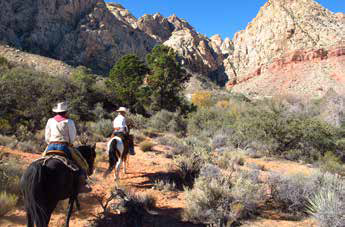
Canyon.
Oak Creek Canyon and Loop Rides
The following day, the Krones explored Oak Creek Canyon, enjoying a gentle 5-mile loop amid fiery red cliffs. They then ventured on two more rides: the Landmine Trail loop and the Badger Pass Trail loop.
- Landmine Trail Loop (9.4 miles): Beginning at the former Bonnie Springs Ranch, this ride features scenic desert landscapes and hidden wildlife, including a small burro family. Riders encounter portions of the historic Old Spanish Trail, which connected Santa Fe to Los Angeles nearly 200 years ago. The trail allows for easy gaiting or trotting and gradually circles the mountain before returning to the starting point.
- Badger Pass Trail Loop (8 miles): Accessible via Highway 159, this loop feels more remote and offers sandy terrain with gentle switchbacks. It provides a quieter, less-traveled alternative for riders seeking solitude while still enjoying the stunning Nevada scenery.
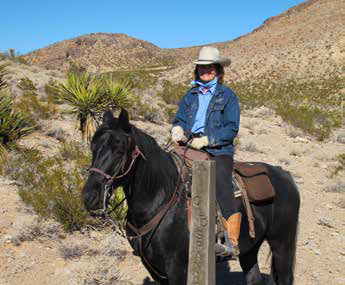
Spanish Trail on the Landmine Trail loop. The Old Spanish
Trail was a trade route between Santa Fe and Los Angeles
between 1829 and 1848.
Tips for Equestrian Travelers in Nevada
Nevada offers an abundance of public lands, scenic trails, and unique desert landscapes. Day rides through Valley of Fire, Red Rock Canyon, and surrounding loops provide unforgettable experiences, whether riding for leisure, exploring historical trails, or seeking high desert adventure. Riders should prepare for desert conditions, watch for cacti, and always carry sufficient water for both horse and rider.
For equestrian travelers, Nevada is more than the Strip—it’s a state of peaks, canyons, and endless trails waiting to be discovered.