When you teach your horse to sidepass, you gain the ability to control each footfall and guide every step with precision. Done correctly, the sidepass teaches your horse to respond willingly to your natural aids—seat, hands, and legs—while improving balance, softness, and overall communication.
Top clinician and trainer Julie Goodnight shares a step-by-step approach to help you position your body correctly, introduce the cue clearly, and build your horse’s understanding with confidence.
What You’ll Need
If your horse is new to sidepassing, begin in a snaffle or a curb bit with articulation between the shanks rather than a solid mouthpiece. A bit with movement helps your horse better feel subtle side-to-side rein aids.
Prerequisite Skills
Before teaching the sidepass, your horse should be able to:
- Stop from a seat cue
- Move forward promptly off your leg
- Back up willingly using more leg than rein
These foundational skills ensure your horse understands how to respond to pressure and release.
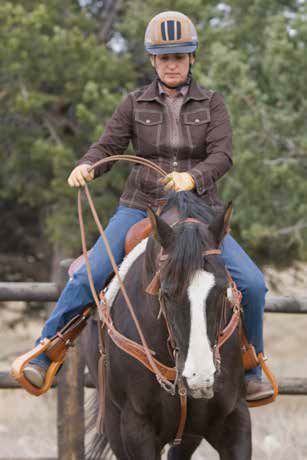
Step 1: Learn and Apply the Cues
After tacking up and warming up, review transitions—walk, stop, back, and turns—to confirm your horse is attentive to your aids.
To understand the sidepass, think of your horse as having six possible “doors” of movement:
- Forward
- Back
- Right shoulder
- Right hip
- Left shoulder
- Left hip
Your job is to open and close these doors strategically.
For a sidepass to the right:
- Slightly shift your weight back to block forward motion.
- Open your right rein by lifting it slightly to encourage the right shoulder to lift.
- Slide your left hand toward the midline of the neck to prevent movement left.
- Open your right leg by stretching it slightly away from the horse (without bracing).
- Close your left leg at the girth and gently bump to ask the body to move right.
By blocking forward motion and closing the left side while opening the right, you create a clear pathway for sideways movement.
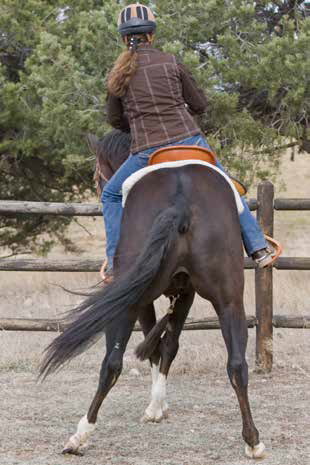
Step 2: Use a Fence Line for Guidance
A safe, solid fence is an excellent training tool. It creates a visual boundary and naturally discourages forward movement.
Position your horse perpendicular to the fence with his nose near the rail. Keeping him straight, apply your sidepass aids.
The moment he makes any sideways effort—even a single step—release the pressure and reward him with a pet. The release is what teaches him he found the correct answer.
Pause briefly, then ask again. As he begins to understand the cue, gradually ask for two or three steps before rewarding.
Repeat the process in both directions. As your horse gains confidence, work toward 10 to 15 straight, balanced steps.
When he’s consistent, try sidepassing with his nose slightly tipped away from the fence while maintaining straightness through his body.
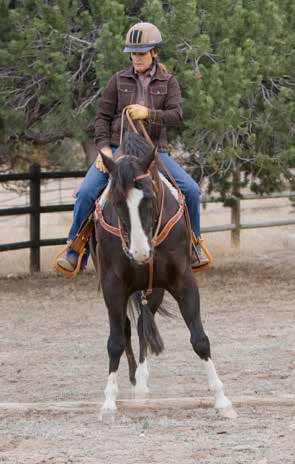
Troubleshooting Common Issues
It’s normal for horses to:
- Drift forward or backward
- Move shoulders too much (causing a turn)
- Let hips lag behind
If the shoulders move too far, close the rein slightly toward the neck to block them. If the hips lag, reinforce with your outside leg to encourage engagement. Maintain light backward rein pressure if needed to prevent forward motion.
Always reward effort. Lateral work is physically and mentally challenging. Keep sessions short and end on a positive note.
If your horse becomes tense, reduce the pressure and reward smaller attempts. Progress builds confidence.
Step 3: Add a Ground Pole
Once your horse understands the cue, test your precision over a ground pole. Keep the pole between his front and hind feet as he sidepasses. The pole quickly reveals whether he’s drifting forward or back.
Practice both directions. Ride away and return so he doesn’t assume he must always step over an obstacle.
As he improves, progress to larger logs or incorporate practical tasks—like sidepassing toward a mounting block or fence post.
Mastering the sidepass strengthens communication, refines your aids, and prepares your horse for both trail obstacles and performance maneuvers. With patience, clarity, and consistent rewards, you’ll develop a more responsive, supple partner—one step at a time.