Winter riding can be exhilarating—the crisp air, frosted landscapes, and quiet trails make it a unique experience for horse and rider. But the season also brings challenges that can affect your horse’s comfort, safety, and performance. Here are six common winter-riding issues, along with expert tips for addressing each one.
1. Physical Fitness
Cold weather often means your horse isn’t getting the same level of exercise as in warmer months. This can lead to a decrease in overall fitness and stamina.
The Fix: Warm up slowly and ride considerately. Pay attention to signs of fatigue, including heavy breathing, sweating, short or uneven steps, or “stumping” of the feet. Gradually increase intensity to help your horse regain strength safely.
2. Dander and Winter Coat Buildup
Dust, dead skin, and dander can accumulate beneath a dense winter coat, causing irritation under tack.
The Fix: Deep-groom your horse regularly. Consider clipping the belly or doing a trace clip (belly and partway up the chest) to make cleaning easier—just remember to blanket clipped horses for warmth. If not clipping, use a curry comb and a stiff-bristled brush or a vacuum to remove dirt and debris. Consistent grooming keeps the skin healthy and prevents irritation.
3. Joint Stiffness
Cold weather can stiffen joints, especially in horses with arthritis or old injuries.
The Fix: Apply a warming liniment and rub the affected areas briskly. Stretch and flex the joints by hand to loosen muscles and tendons. Wearing heavy rubber gloves protects hands from both cold and chemicals. Wrapping the horse’s legs overnight can also help maintain joint flexibility.
4. Frozen Ground
Riding on frozen ground is like working on concrete—it can bruise hooves, strain joints, and even damage the frog.
The Fix: Use hoof boots for barefoot horses or add pads under shoes. Many modern hoof boot designs can even fit over shoes for added protection. These solutions provide cushioning and reduce the concussion on hard, frozen surfaces.
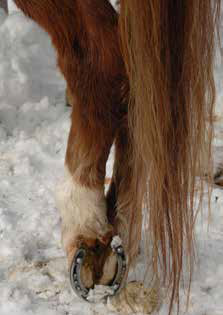
your horse’s feet and joints.
5. Icy Terrain
Ice is particularly dangerous, increasing the risk of slips and falls.
The Fix: Barefoot horses generally have better traction than shod horses, but even they may benefit from boots on icy surfaces. Horses with shoes can use studs or borium for traction, though these can put extra stress on joints and tendons. Boots over shoes are another option, offering grip while reducing strain.
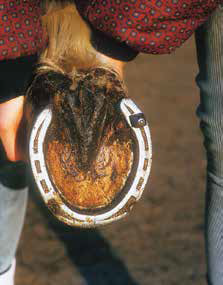
surfaces, but they also increase leg
strain.
6. Snowballing
Snowballing occurs when snow and ice accumulate in the hoof, creating hard mounds that can make walking painful or unstable.
The Fix: Traditional full pads don’t prevent snow buildup. Rim snow pads, which extend slightly over the sole without covering it completely, are effective—they compress and release as the horse moves, naturally ejecting snow. Boots over shoes are another convenient solution: they protect against snowballs during the ride and can be removed afterward.
in snowballing—the accumulation of
ice and snow in the bottom of the foot.
Inset: This rim snow pad serves a dual
purpose: shedding snow and reducing
concussion to the feet and legs.
Winter riding requires awareness and preparation, but with the right strategies, you can keep your horse comfortable, safe, and happy on the trails. Grooming, hoof protection, warm-ups, and proper equipment make cold-weather riding as enjoyable as any other season—without the risk of injury or discomfort.