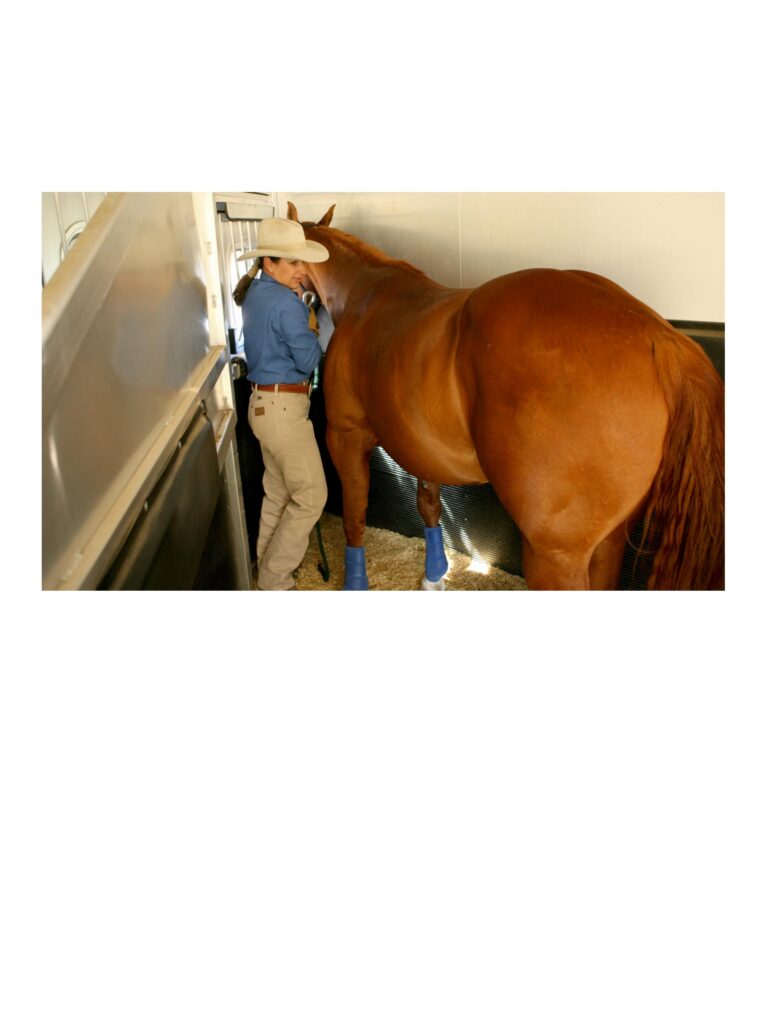
Deworming is a year-round necessity — especially for moderate to heavy egg shedders, foals, and horses heading into summer. But for many horse owners, it’s also a wrestling match. If your horse throws his head, backs away, or turns deworming into a full-on ordeal, top trainer Clinton Anderson says the problem likely isn’t the horse — it’s the approach. “Avoid sneaking up to your horse and jamming the dewormer in his mouth,” Anderson advises. Horses are prey animals, and a direct, forceful approach triggers a defensive response. The fix? Patience, desensitization, and a little honey.
A Step-by-Step Process That Actually Works
Start by desensitizing your horse to the dewormer syringe — before you ever try to use it. First, wave an empty syringe around his head and muzzle from about eight inches away until he stands calmly. Then rub the syringe all over his body, working toward his face and muzzle using an approach-and-retreat method. The goal is simple: he should be completely unbothered by the syringe before it ever goes near his mouth. Anderson’s advice here is to move confidently, not cautiously — slow and sneaky reads as suspicious to a horse.
Once he’s relaxed with the syringe touching him, coat an empty syringe with something sweet — honey or molasses work well — and gently ease it into the corner of his mouth. Let him associate the syringe with something pleasant. Then fill the syringe with honey and actually “deworm” him with it over several days, so he begins to look forward to the process rather than dread it. When it’s time for the real thing, coat the outside of the dewormer syringe with something sweet, administer it, and immediately follow up with a honey syringe. Always end on a good taste.
In the days leading up to each scheduled deworming — and for a few days after — repeat the honey dewormer routine. Over time, what was once a battle becomes a non-event. As Anderson puts it, “Always leave your horse with a positive taste in his mouth.”