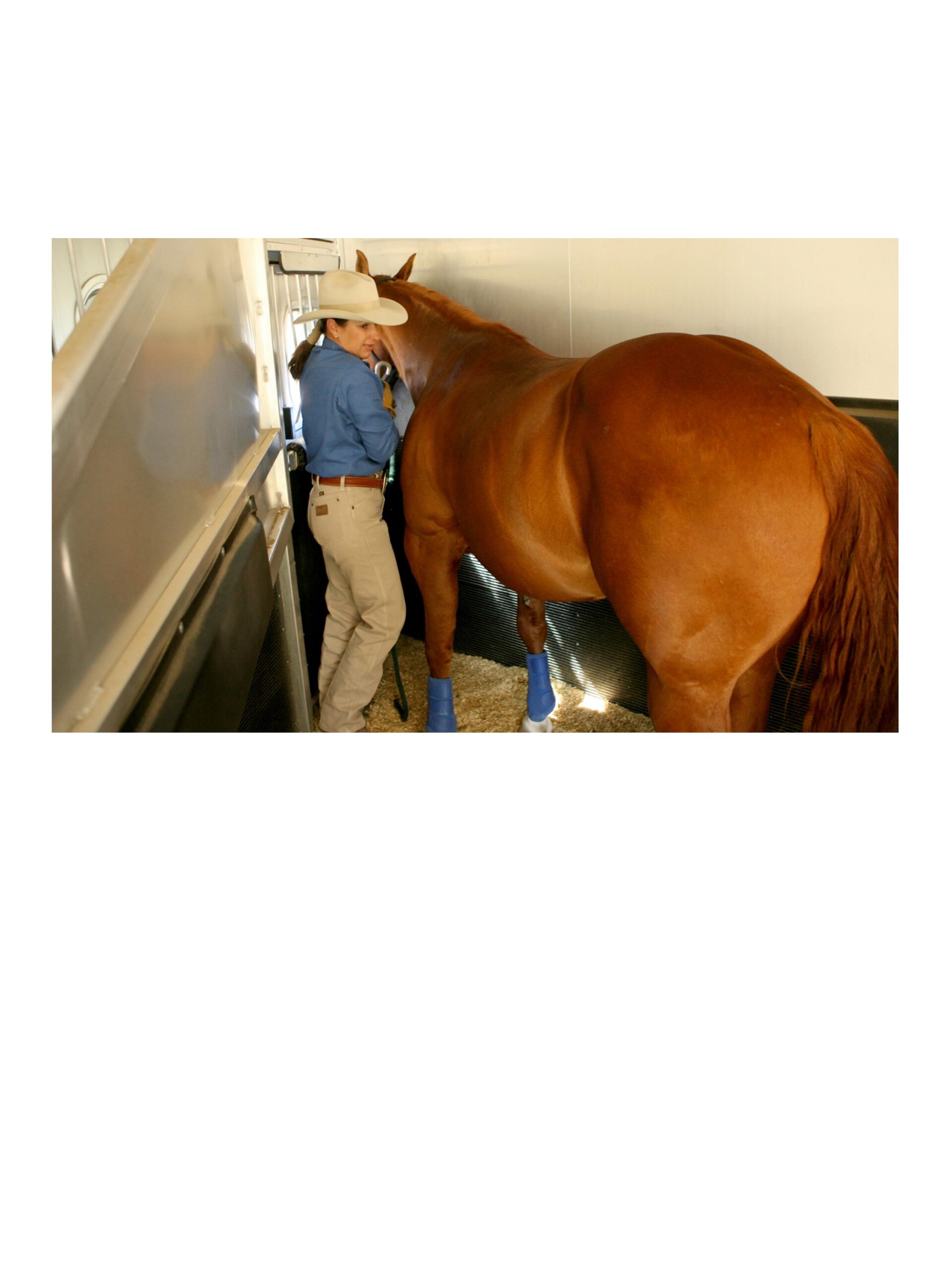
If your horse loads into the trailer just fine but then rushes backward the moment he’s inside, you know how dangerous this behavior can be — for him, for you, and for anyone nearby. The good news? With the right approach, it’s a fixable problem.
First, Figure Out the Root Cause
Before you start any training, you need to determine whether your horse is acting out of fear or habit. The simplest test: will he eat inside the trailer? Horses physically cannot eat when they’re truly frightened, so if he refuses food, fear is likely the culprit. A scared horse needs patience and desensitization — not force. Start by feeding him in progressively smaller confined spaces, gradually working up to full meals inside a closed trailer. Give him time to realize the trailer is a safe place to be.
If he loads willingly and eats without issue, his fast-backing is most likely a learned behavior — and that calls for a different solution.
The Step-by-Step Fix
For behavioral backing, you’ll need a rope halter, a long training lead (at least 15 feet), a training flag, and a knowledgeable helper. Here’s the process:
Start on the ground. Before you even approach the trailer, make sure you have solid control of your horse on a loose lead. Practice walking him forward and back, and establish a clear “back” cue — light backward pressure on the lead paired with a verbal command. He should take one calm step at a time, on your signal only.
Approach and load. Lead your horse toward the trailer, keeping his head pointed forward. Rather than pushing him from behind, have your helper stand back with the flag. If your horse hesitates or begins to back, the helper waves the flag — the sound and movement create just enough mental pressure to encourage him forward. The moment he steps forward, the flag stops. He quickly learns that backing brings discomfort, while moving forward brings relief.
Once loaded, reward him with a small bite of grain and a moment to relax. This isn’t bribery — it’s helping him associate the trailer with safety and calm.
Unload slowly and deliberately. This is where the real training happens. Stay to the side for safety, keep the lead loose, and ask for one step back at a time. After each step, ask him to halt, give him a pet, then ask again. If he starts to rush, the flag comes back into play until he’s still or moving forward. Calm, one-step-at-a-time unloading is the goal — and repetition is what makes it stick.
Patience Pays Off
Whether your horse’s trailer behavior stems from fear or habit, the solution is the same at its core: slow down, build trust, and reward the right responses. Rushing the process will only set you back. But with consistent practice, most horses can learn to load and unload safely, calmly, and on your terms.